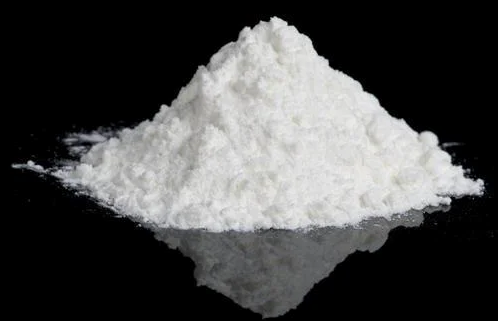
If you ever come across a lab where people leave unlabelled products on a table, you may wonder what exactly it is you have found. Some things have a distinctive colour, smell, texture, but an annoyingly large number of them are white crystalline powders.
So how do you answer the question “what is this?” I find that kind of measurement/sensor/detector technology to be endlessly fascinating. When it comes to figuring out what a substance is, the tests all revolve around figuring out some kind of feature of the substance that we can recognise. That is really vague because the tests are more vague than we sometimes give them credit for.
A Fourier-Transfer Infrared (FTIR) based detector looks for functional groups of a substance. A gas chromatography one compares elution times which is a proxy for volatility in the gas phase. A mass spectrometer will try and identify base on the mass of fragments. A colorimetric test will usually use the target substance as a catalyst for a colour-change reaction.
What we would love is a rugged handheld device which we could point at anything and it could tell us what it is, regardless of its purity or nature, without destroying it, to a perfect degree of sensitivity and specificity. Certain detectors – like a Raman spectrometer – do approximate that, as long as it not a dark energetic, or too much of a mixture, or Raman inactive, and you don’t care about isotopes, etc. But even a Raman spectrum does not actually give a readout of what a substance is, it merely tells you about its (Raman active) bonds and then the library will guess as to what the molecule is. This library step can mislead the end user into believing that a Raman test is more confirmatory than it really is.
Even if we separate our substance for purity with some kind of chromatography, get an IR spectrum to identify functional groups and a mass spectrum to identify the mass fragments, we would still not be able to distinguish confidently between isomers of compounds in all cases. These techniques ignore stereochemistry, which can be really important: the famous medication thalidomide had one isomer which helped against morning sickness and the other gave babies birth defects. The difference was the arrangement of the molecule.
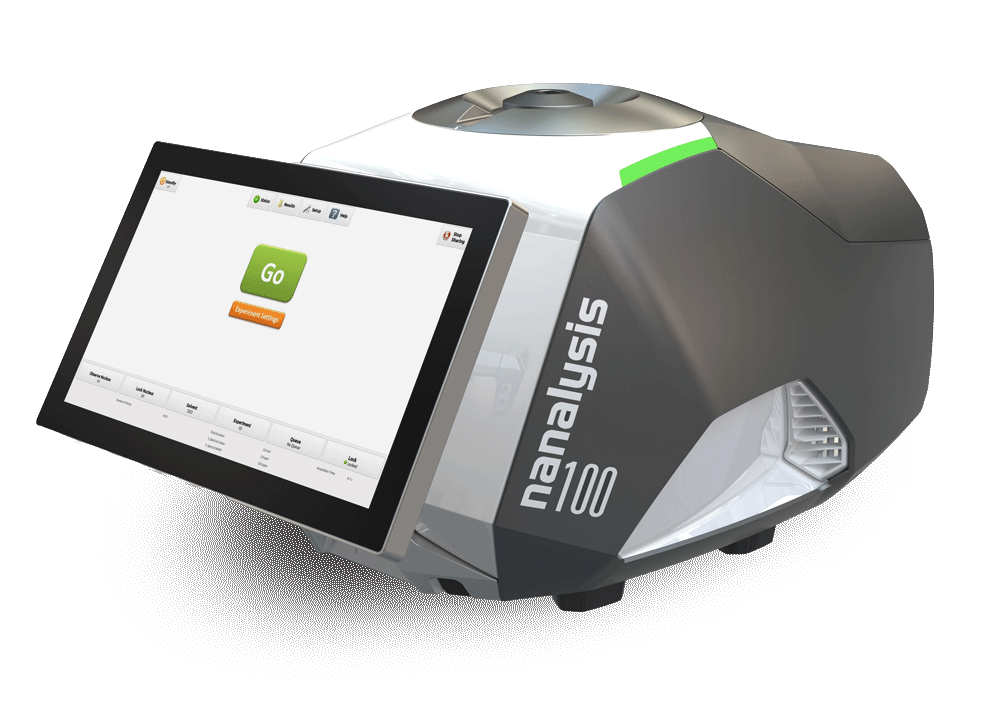
The good news is that you very rarely need to know everything about a substance. Sometimes you only care if it is energetic. You may want to check for the presence of blood or a narcotic. Maybe you only care about whether or not you can breathe in a certain environment by checking for certain poisonous gases and oxygen. Being specific about what you want a detector to do is important in selecting the right tool and you then have to be conscious of its limitations.
The Raman spectrometer mentioned before will continue to be a go-to for me, even though I can’t really sample gases effectively, and it can detonate dark energetic compounds, and it cannot see metals, or ionic acids like hydrochloric acid…I need it to be able to identify explosives, ideally without touching them, and the kinds of covalent bonds that explosives have are typically Raman active. If a trace amount of darker powder detonates, then I basically have the answer I need anyway.
Your use case may be different in terms of the scope of compounds, the safety requirements, or the forensic sensitivity involved. It is important that you determine your needs carefully and then select the tool that best approximately what you do.
PS: the header image is from an online advert for “white crystalline powder”, which is apparently lab grade and very pure. Unfortunately, it has no information on what it actually is so a few of these techniques would be in order.
Leave a Reply